Owning property along Lake Michigan comes with the responsibility of understanding and caring for the natural landscape surrounding it. From managing water drainage to maintaining vegetation and recognizing early signs of erosion, the way a lakeshore property is maintained can play an important role in its long-term condition.
For homeowners in Ganges Township, bluff management is an especially important consideration. Natural forces such as rainfall, groundwater movement, wave action, and changing lake levels continuously influence the stability of the shoreline.
As part of Cottage Home's educational forum series, we hosted a discussion focused on best practices for bluff management. The conversation explored ways homeowners can better understand their properties, recognize factors that contribute to erosion, and make informed decisions about maintaining and protecting their Lake Michigan shoreline.
With continued discussion surrounding Ganges Township Article 14 and the proposed Lake Michigan Shoreline Overlay District, understanding responsible bluff management is more important than ever.
Why Proper Bluff Management Matters
Bluff erosion is a natural process along the Lake Michigan shoreline, but certain property conditions and maintenance practices can contribute to increased erosion or slope instability.
Water management, vegetation, grading, and shoreline conditions all influence how a bluff responds to environmental changes.
While no maintenance practice can completely eliminate natural erosion, understanding how these factors interact can help homeowners make more informed decisions about caring for their properties.
Proper bluff management begins with recognizing that every lakeshore property is different. The best approach depends on the property's soil composition, slope, drainage patterns, vegetation, and proximity to the water.
1. Manage Water and Drainage Near the Bluff
Water management is one of the most important considerations when maintaining a Lake Michigan bluff.
Rainfall, snowmelt, and groundwater can affect soil stability, particularly when water becomes concentrated in one area or is allowed to flow over the bluff.
Homeowners should pay attention to how water moves across their property and look for potential drainage concerns.
Some important considerations include:
- Directing roof runoff appropriately: Downspouts and drainage systems should be designed to prevent concentrated water discharge near the bluff edge.
- Monitoring surface drainage: Pay attention to areas where water collects, flows toward the bluff, or creates visible channels.
- Avoiding concentrated runoff: Uncontrolled water flow can contribute to soil erosion and instability.
- Recognizing groundwater concerns: Seepage, wet areas, or changes in soil conditions may indicate drainage issues that warrant professional evaluation.
Drainage solutions should be evaluated carefully. Simply redirecting water without considering where it will go can create new problems for neighboring properties or other areas of the landscape.
2. Maintain Appropriate Vegetation
Vegetation plays an important role in the natural stability of coastal bluffs.
Established grasses, shrubs, and trees can help manage surface runoff, reduce soil exposure, and provide root systems that contribute to soil reinforcement.
Removing vegetation or disturbing established root systems can leave soil more vulnerable to rainfall and surface erosion.
When considering landscaping near a Lake Michigan bluff, homeowners should keep several things in mind:
- Preserve established vegetation whenever possible.
- Consider native plants that are appropriate for local soil and growing conditions.
- Avoid unnecessary clearing or removal of vegetation near the bluff.
- Seek professional guidance before planting or removing larger trees and shrubs on steep slopes.
Not all plants provide the same benefits, and vegetation alone cannot stabilize an actively moving bluff. Plant selection and maintenance should take the property's specific conditions into account.
3. Be Mindful of Grading and Excavation
Changes to the natural landscape can influence how water moves and how stable a bluff remains.
Grading, excavation, filling, and other earth-moving activities can alter slope conditions, remove vegetation, and change existing drainage patterns.
Before making significant landscape changes near a bluff, homeowners should understand the potential effects on the surrounding property.
Projects involving retaining walls, terraces, landscaping, or changes in elevation may require professional engineering guidance and applicable local or state approvals.
It is particularly important to understand the requirements of Ganges Township Article 14 and other applicable shoreline regulations before beginning work.
4. Understand Shoreline Protection Options
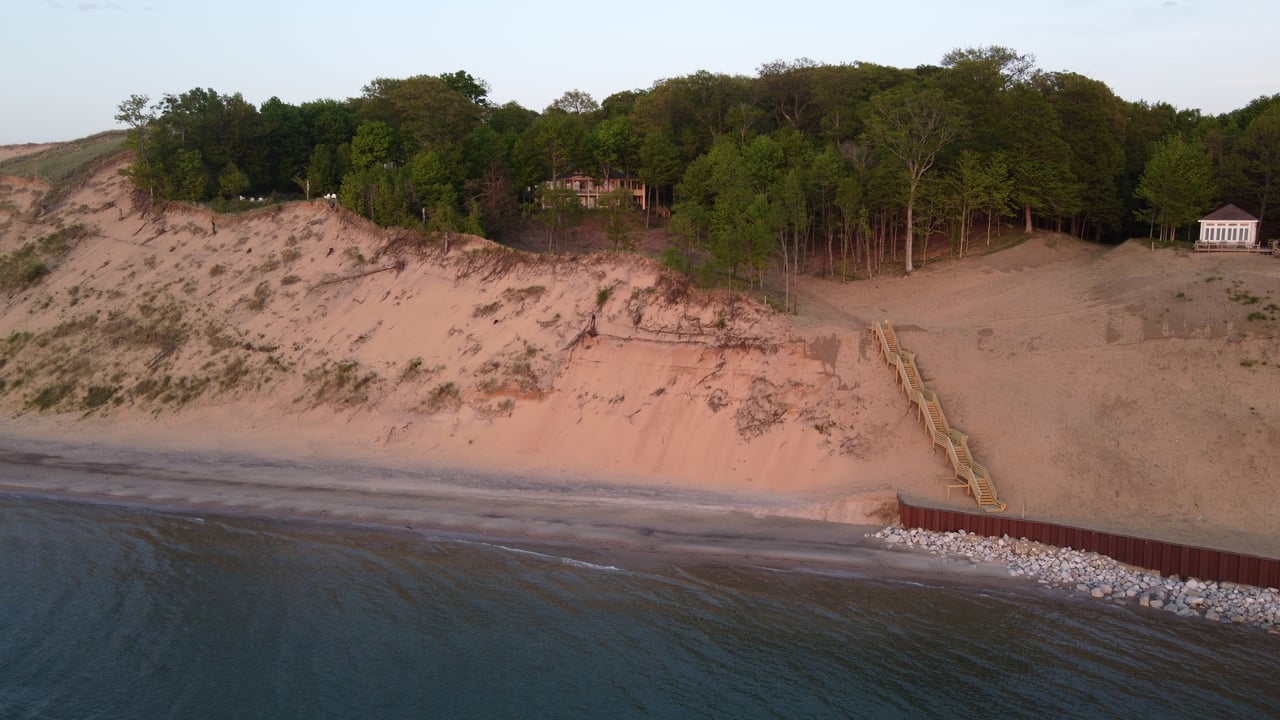
Some Lake Michigan homeowners consider shoreline protection measures to help address wave action and erosion along the water's edge.
Common shoreline protection approaches may include:
- Riprap: Strategically placed stone used to help reduce wave energy and protect portions of the shoreline.
- Seawalls: Engineered structures designed to protect the shoreline from wave action.
- Natural shoreline approaches: Certain projects incorporate native vegetation and other natural materials to help manage erosion.
The appropriate approach depends on the property's shoreline conditions, wave exposure, soil characteristics, and applicable permitting requirements.
It is important to understand that shoreline protection is not a one-size-fits-all solution. A method that works in one location may not be appropriate for another.
Projects involving shoreline structures or modifications may require permits from EGLE, the U.S. Army Corps of Engineers, or other applicable authorities. Homeowners should verify permitting requirements before starting any shoreline work.
5. Recognize Changes in Bluff Conditions
Regularly observing your property can help homeowners recognize changes that may warrant additional attention.
Although some movement and erosion are natural, certain changes can indicate developing drainage or slope-stability concerns.
Things to watch for include:
- New cracks or separations in the ground near the bluff.
- Areas of soil movement or slumping.
- Exposed roots or newly leaning trees.
- Changes in drainage patterns or unexpected wet areas.
- Visible erosion channels developing along the slope.
- Changes near the base of the bluff following significant storms.
These observations do not necessarily mean a bluff is unstable, but they can be useful information when consulting a qualified professional.
Homeowners should avoid attempting repairs or making changes to an actively moving slope without professional guidance.
6. Understand Local and State Regulations Before Making Improvements
Responsible bluff management also means understanding the regulations that apply to your property.
Ganges Township Article 14, the proposed Lake Michigan Shoreline Overlay District, addresses development and property improvements within designated shoreline areas.
In addition to local zoning requirements, Michigan's Department of Environment, Great Lakes, and Energy (EGLE) administers programs and permitting requirements that may apply to shoreline construction, erosion protection, and other activities near Lake Michigan.
Depending on the proposed project, homeowners may need to consider:
- Township zoning and building requirements.
- High-Risk Erosion Area (HREA) setback requirements.
- EGLE shoreline and environmental permits.
- Federal permitting requirements for certain shoreline activities.
- Engineering or geotechnical evaluations.
Before beginning a project, homeowners should confirm which regulations apply and obtain all necessary approvals.
Understanding these requirements early can help avoid unnecessary delays, unexpected expenses, and complications during construction.
Taking a Proactive Approach to Lakeshore Property Care
Protecting a Lake Michigan property begins with understanding the natural conditions of the land and making informed decisions about its care.
Routine observation, responsible water management, preserving appropriate vegetation, and seeking professional guidance when concerns arise can all contribute to a more informed approach to bluff management.
Every property along the Ganges Township shoreline has its own unique conditions. For that reason, homeowners should approach bluff maintenance and erosion concerns with property-specific information rather than relying on a single solution.
Through its educational forum series, Cottage Home wanted to help homeowners better understand the challenges associated with owning lakeshore property and provide an opportunity to ask questions about the regulations and environmental considerations affecting the community.
As conversations surrounding Article 14 continue, staying informed about both the natural conditions of the bluff and the regulations governing lakeshore improvements will remain important.
Caring for your lakeshore property today means making thoughtful decisions that consider the land, the shoreline, and the future of Lake Michigan living.