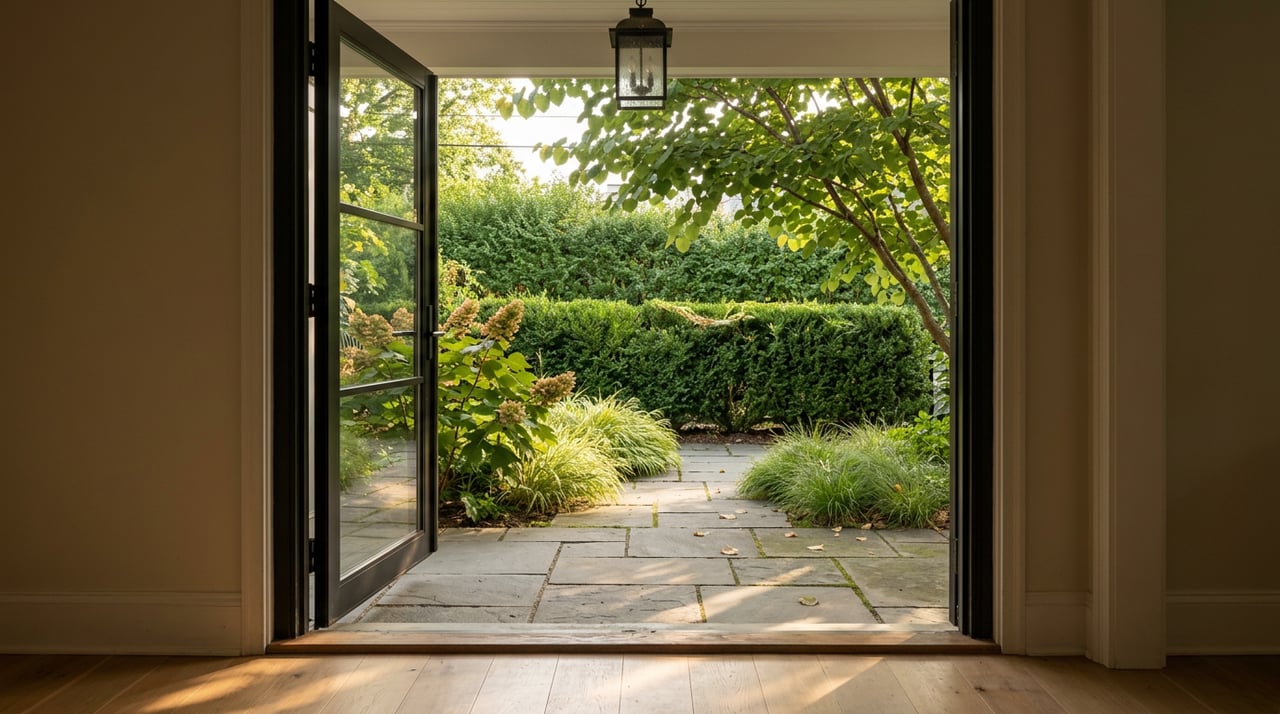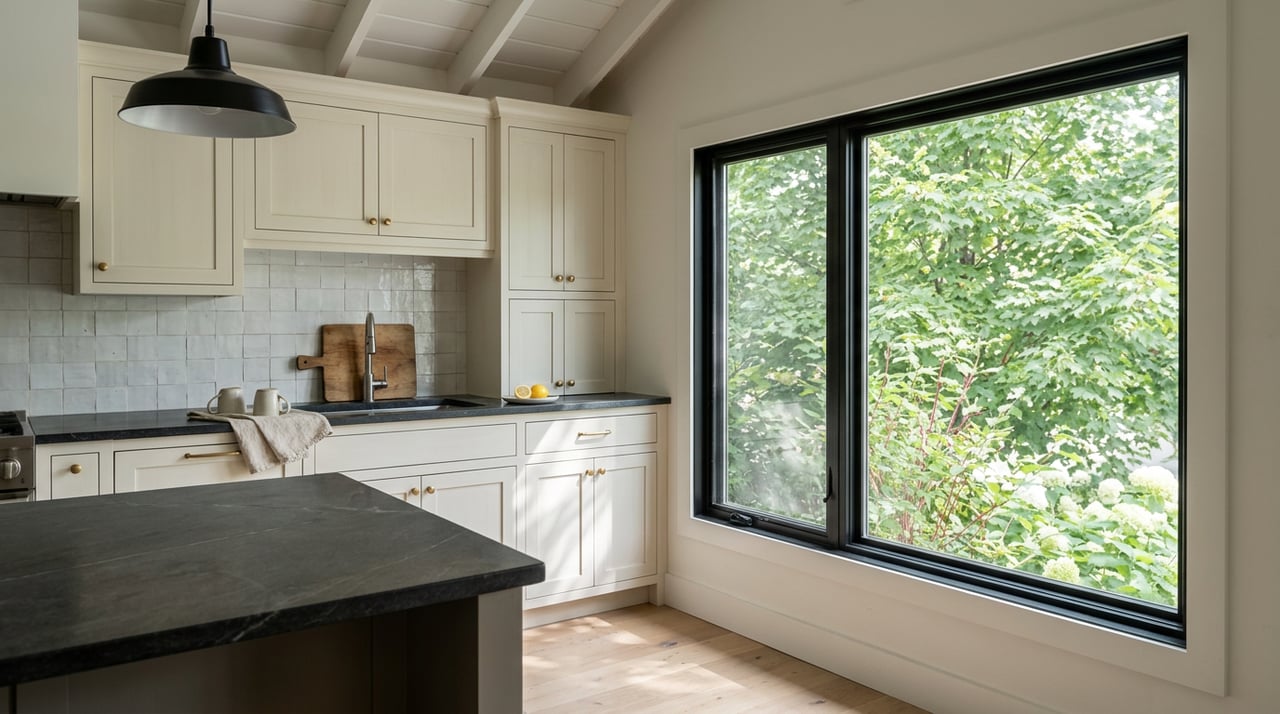
On January 9, 2026, the Saugatuck Historic District Commission spent part of its meeting on a bed and breakfast renovation on Water Street. The owners wanted to add rooms. The commission's questions were not about the business plan. They were about the windows.
Some of the existing stained glass was not original to the building, and the owners proposed removing it to meet egress requirements. Commissioners debated replacement window style, landing on a preference for double-hung windows without divided lights. Then the conversation moved to the deck and railings, where the commission pushed back on PVC and asked for alternatives. The application was approved with conditions, and the minutes note the commissioners praised the applicants for working within the process rather than around it.
That level of detail, argued over material by material, is the actual texture of buying an older home inside Saugatuck's historic district. It is worth knowing before you're the one sitting across from the commission, because the same city that scrutinizes your deck boards has almost nothing to say about your septic tank. Those two facts sit right next to each other in a Saugatuck real estate transaction, and most buyers only discover the gap between them after they've already closed.
What Triggers Historic District Review, and What Doesn't
The Saugatuck Historic District Commission was established in 1981 and covers both commercial and residential properties across the heart of the village. Its job is to review proposed exterior work on buildings within the district and determine whether it meets the Secretary of the Interior's Standards and Guidelines for Rehabilitation. The commission has seven members, residents of the city, appointed by the mayor with council approval, and the ordinance calls for a majority to have a demonstrated interest in or knowledge of historic preservation. Where possible, the seven include a licensed architect and a nominee from a local preservation organization.
That review only applies to exterior changes. Repaint your kitchen, replace your furnace, refinish your floors, and none of it touches the commission's desk. But step outside the walls and the scope widens further than most buyers expect. At that same January 2026 meeting, the commission reviewed a proposed rear addition on Butler Street and sent the applicant back for revised schematics, asking for more attention to mass, scale, and materiality in context with the neighboring buildings. A few items later, it took up a sign application for a new home décor store, also on Butler Street, weighing letter placement and anchoring against the district's prohibition on painting masonry before approving a revised option.
None of that is a rubber stamp process. It is a working commission that meets regularly, reviews specific properties by address, and asks for revisions when a proposal doesn't fit. If you're buying a historic cottage downtown with renovation plans already in mind, the honest expectation to set is that your exterior choices, window style, siding, decking material, signage, additions, all go through that same review before a permit is issued. Budget the time for it the way you'd budget for a structural inspection.
The Review That Doesn't Exist
Now widen the frame past the historic core, out to the septic-served properties that make up a large share of Saugatuck Township's housing stock, the wooded lots and lakefront parcels that sit outside city limits. Here the pattern reverses entirely.
Michigan is the only state without a statewide sanitary code. Instead, 45 local health departments write and enforce their own rules for septic systems, county by county. Some communities have responded by adopting Time of Sale or Transfer ordinances that require a septic evaluation before a property can change hands. Elk Rapids Township is one example, with an ordinance that blocks a transfer until the system has been evaluated and a written report handed to the buyer. Washtenaw County is another, where a mandatory evaluation is built into the closing process.
Allegan County, where Saugatuck sits, has not gone that route. The county health department runs a point of sale evaluation program, but it's available rather than required. Nothing in county or state law forces a septic inspection before your closing date arrives. If your lender doesn't ask for one and your purchase agreement doesn't build one in as a contingency, a septic system that hasn't been evaluated in decades can pass from one owner to the next without anyone outside the property line ever looking at it.
That gap matters more on the lakeshore than it does inland. Allegan County's soils range from well-drained sandy loam near the Lake Michigan shoreline plain to heavier clay further inland, with muck and peat in the wetlands along the Kalamazoo River requiring engineered systems altogether. Sandy soil drains fast, which can mask a failing drain field until the evaluation actually happens. When it does happen, in Michigan overall, a full septic evaluation typically runs a few hundred dollars, more on a lakefront property where load testing is warranted. A system that fails outright can run into the tens of thousands of dollars to replace. None of that cost shows up anywhere in the transaction unless a buyer chooses to look for it.
What This Means If You're Buying to Renovate
The practical read for someone shopping in Saugatuck right now splits along exactly this line.
If the property sits inside the historic district and you're planning exterior work, start the commission conversation early. Look at what's already been approved or sent back for revision on similar projects, and build a realistic timeline around commission meeting cycles rather than around a general contractor's estimate. A design that respects the district's materials and massing from the first submission moves faster than one that has to come back for a second look.
If the property is on well and septic, whether in the township or anywhere outside municipal water and sewer, treat an independent evaluation as a requirement you set yourself, not one the county sets for you. That means writing it into your purchase contingency, scheduling it with enough lead time before closing, and asking directly for permit history, pumping records, and any prior repair documentation from the seller. Allegan County's own health department, which issues septic permits and can also conduct evaluations at a buyer's or lender's request, is the first call to make once you have an address in mind.
For homes that fall into both categories, a historic cottage on well and septic within an older section of the district, the two timelines run in parallel and neither one waits for the other.
A Few Questions Worth Settling Before You Offer
Does buying an older home in Saugatuck require a septic inspection? Not automatically. Michigan has no statewide septic code, and Allegan County's evaluation program is available rather than mandatory. Unless your lender requires one or you write it into your offer, the system's condition may never be independently checked before you own it.
What kind of work actually needs Historic District Commission approval? Any exterior change to a property within the district, from window replacement to decking material to new additions or signage. Interior renovations fall outside the commission's review entirely.
Does Saugatuck Township have the same historic review process as the city? No. The Historic District Commission's authority covers the district established by the city in 1981. Properties in Saugatuck Township go through the township's standard building permit process instead, with fees based on project value and permits valid for one year, extendable to two.
None of this is a reason to slow down on a property you've already fallen for. It's a reason to ask the right questions in the right order, before the offer rather than after the inspection contingency has already expired. That's the kind of groundwork that separates a renovation that stays on budget from one that doesn't, and it's exactly where a team that handles design, construction, and the sale itself under one roof earns its keep.
If you're weighing an older Saugatuck property with renovation in mind, Cottage Home Realty can walk the historic district and septic questions with you before you write an offer, not after. Begin your lakeshore home journey.